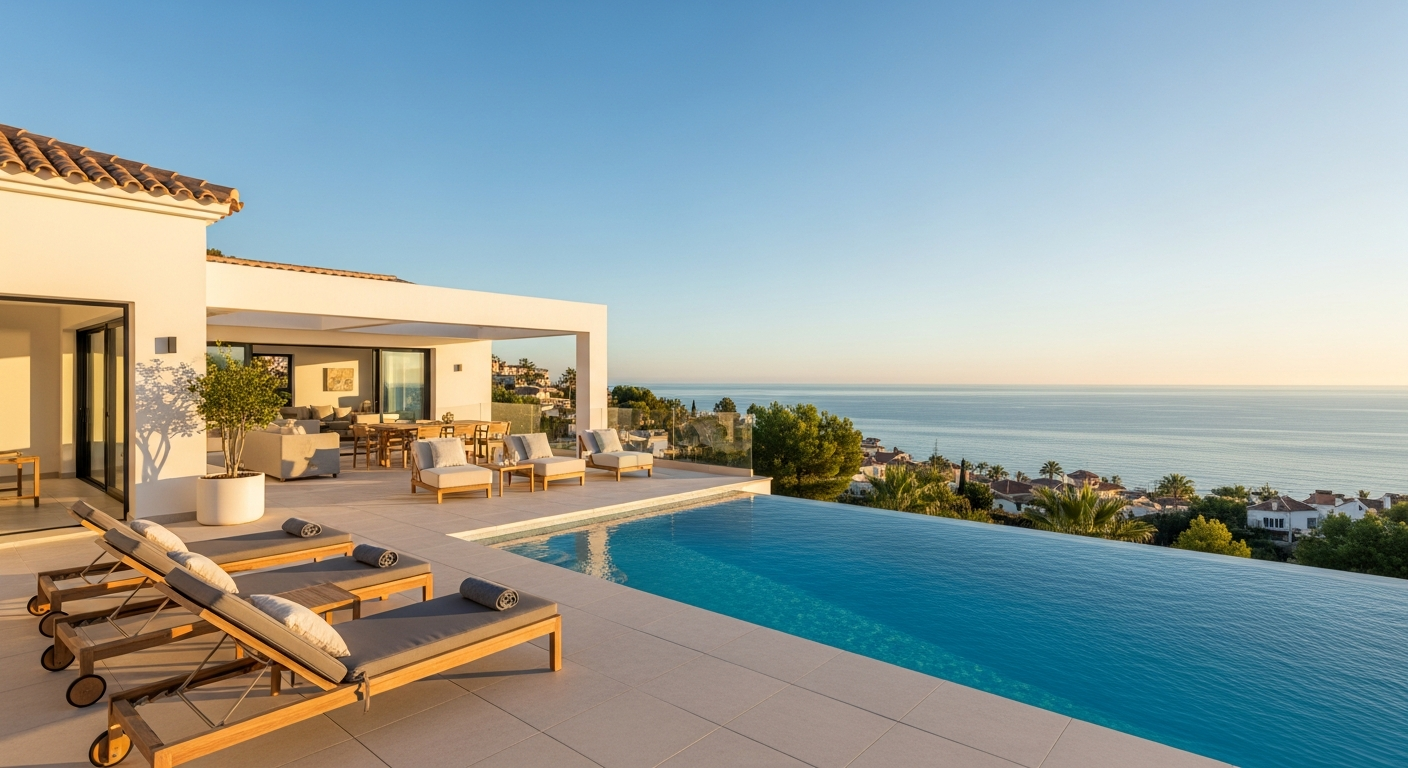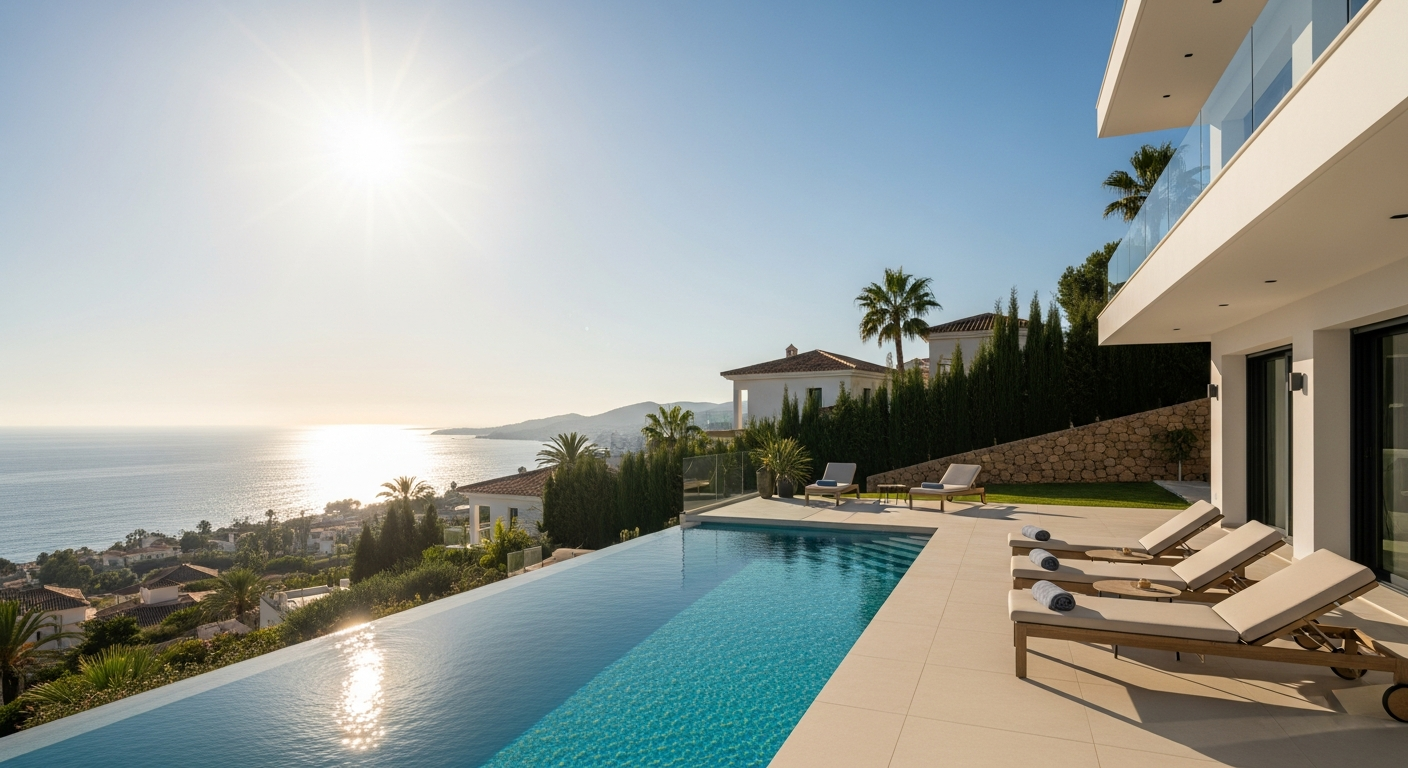
A guide to the smart home technology and sustainability features shaping the Costa del Sol's newest luxury developments — and what discerning buyers should look for.
The Costa del Sol has always attracted buyers seeking sunshine, sea views and a certain effortless glamour. What has changed in recent years is the definition of luxury itself. Today, the most sought-after homes are not simply large and beautifully finished — they are intelligent, energy-efficient and designed to tread more lightly on the environment. If you are researching new luxury developments on the Costa del Sol with smart home technology, this guide explains the features that genuinely matter and where along the coast they are appearing.
Why smart homes and sustainability now define coastal luxury
Buyers arriving from northern Europe, North America and the Gulf increasingly expect the same seamless technology at their Mediterranean residence that they enjoy at home. At the same time, tighter Spanish and EU building regulations have pushed developers towards higher energy-performance standards. The result is a new generation of homes where sustainability is not a marketing afterthought but a structural feature.
It is worth remembering that buying property in Spain no longer confers residency — the country's investor visa scheme was withdrawn in April 2025. Purchases today are driven purely by lifestyle, rental potential and long-term value, which makes the practical quality of a home more important than ever.
The five hallmarks of the newest luxury developments
Rather than ranking individual schemes — which come and go with each release cycle — it is more useful to understand the five categories of development now defining the top end of the market. These are the traits to look for when you compare projects across the coast.
1. Fully integrated smart home systems
The headline feature of any contemporary luxury development is centralised home automation. Expect a single app or wall-mounted panel controlling lighting, climate, blinds, security, irrigation and audio-visual systems. The best installations use recognised protocols such as KNX, allowing different manufacturers' devices to work together and remain upgradeable over time.
Practical benefits go well beyond convenience. Presence simulation deters intruders while you are away; automated shading reduces cooling loads during the fiercest summer months; and remote access lets overseas owners monitor their property year-round. When viewing, ask whether the system is truly integrated or simply a collection of standalone gadgets — the difference in usability is considerable.
2. Genuine energy efficiency and near-zero consumption
Modern developments increasingly aim for very high energy-performance ratings, and many new-build homes are marketed with near-zero-energy credentials. Look for aerothermal heating and cooling systems, which draw energy from the ambient air far more efficiently than conventional boilers, alongside solar photovoltaic panels and battery storage.
Thick insulation, high-performance glazing and thermal-bridge-free construction all contribute. Ask the developer for the property's energy certificate and, where possible, evidence of the actual specification rather than aspirational brochure language. A well-designed home should keep running costs modest even during a Costa del Sol summer.
3. Sustainable materials and water-conscious landscaping
Sustainability at the luxury end now extends to material choices — responsibly sourced timber, low-carbon concrete alternatives and locally quarried stone. Outside, drought-tolerant Mediterranean planting and drip irrigation reduce water use, an increasingly serious consideration in southern Spain. Some developments incorporate rainwater harvesting and greywater recycling for garden use.
These features matter for resale as well as conscience. As buyers become more informed, homes that are cheap to run and light on resources hold their appeal.
4. Wellness-oriented architecture
The pandemic accelerated a lasting shift towards homes that support health. Expect generous natural light, cross-ventilation, private gyms, spa facilities, heated indoor-outdoor pools and dedicated home-office space with robust connectivity. Air-filtration systems and circadian lighting that adjusts colour temperature through the day are becoming common in the most ambitious schemes.
5. Resort-style shared amenities and services
Finally, the newest gated communities blur the line between private residence and five-star resort: concierge services, co-working lounges, wellness centres, padel courts and beautifully maintained communal gardens. For overseas owners in particular, on-site management that handles maintenance, security and rentals is a significant draw.
Where these developments are appearing
Development activity is concentrated in the coast's established prestige enclaves. Around Marbella, the classic triangle of luxury continues to attract the most sophisticated projects — from the leafy avenues of Nueva Andalucía with its golf valley views to the exclusivity of the hillside communities above the town.
Further west, Benahavís has emerged as a hotspot for contemporary villas that make the most of dramatic mountain-and-sea panoramas, while Estepona offers newer, often more competitively priced developments with a regenerated town centre and marina. Each area has its own character, and the right choice depends on whether you prioritise buzz, seclusion, golf or beach access.
On the market now:
€1,350,000 — Los Naranjos Marbella apartment. View listing — three bedrooms, three baths, in the Nueva Andalucía golf-valley belt.
€5,000,000 — Detached Villa, Benahavís. View listing — five bedrooms, five baths, the mountain-and-sea panorama this segment is built around.
What buyers should check before committing
Verify the specification, not the render
Off-plan brochures are aspirational by nature. Ask for the detailed technical specification (the memoria de calidades), confirm which smart-home and energy features are included as standard versus optional extras, and clarify warranty arrangements for both the building and its technology.
Understand the true cost of ownership
Beyond the purchase price, budget for community fees, which are typically higher in amenity-rich developments, plus local property tax (IBI) and utilities. For resale properties rather than new builds, remember that Andalucía applies a 7% property transfer tax (ITP); new-build purchases are instead subject to VAT and stamp duty. A local lawyer independent of the developer is essential.
Consider future-proofing
Technology dates quickly. Favour open, upgradeable systems and developers with a track record of after-sales support. Ask how software updates are handled and whether the community has a plan for maintaining shared smart infrastructure over the long term.
Is a smart, sustainable home worth the premium?
For most buyers, the answer is yes — provided the features are genuine. A well-integrated home is more comfortable, cheaper to run, more secure and easier to manage remotely, all of which appeal to the international buyers who dominate this market. Sustainability credentials also increasingly influence resale value as regulations tighten and buyer awareness grows.
The key is to look past the marketing and assess the substance. Whether you are drawn to a turnkey villa or an off-plan apartment in a resort-style community, the developments that will hold their value are those where intelligence and efficiency are built into the fabric of the home rather than bolted on. Take your time, view widely across the coast's prime areas, and lean on independent professional advice at every stage.