Andalusia: From Phoenician Harbours to the Costa del Sol
By Dmitry Mateshin, Founder
A short history of Andalusia, from Phoenician trading posts and Roman Baetica to al-Andalus, 1492 and the coast people choose to live on today.
Andalusia was never one story. It was a place where traders, armies, farmers and kings arrived by sea and over the mountains, and the layers they left are still part of everyday life on the coast. This is a short guide to how it took shape, and why that history is part of what you buy into when you choose to live here.
Before Spain: harbours and traders
Long before any kingdom, people lived in these valleys and caves. The region has some of the oldest traces of human presence in Spain, and by the Neolithic, farming and herding had arrived, first in the east around Almería.
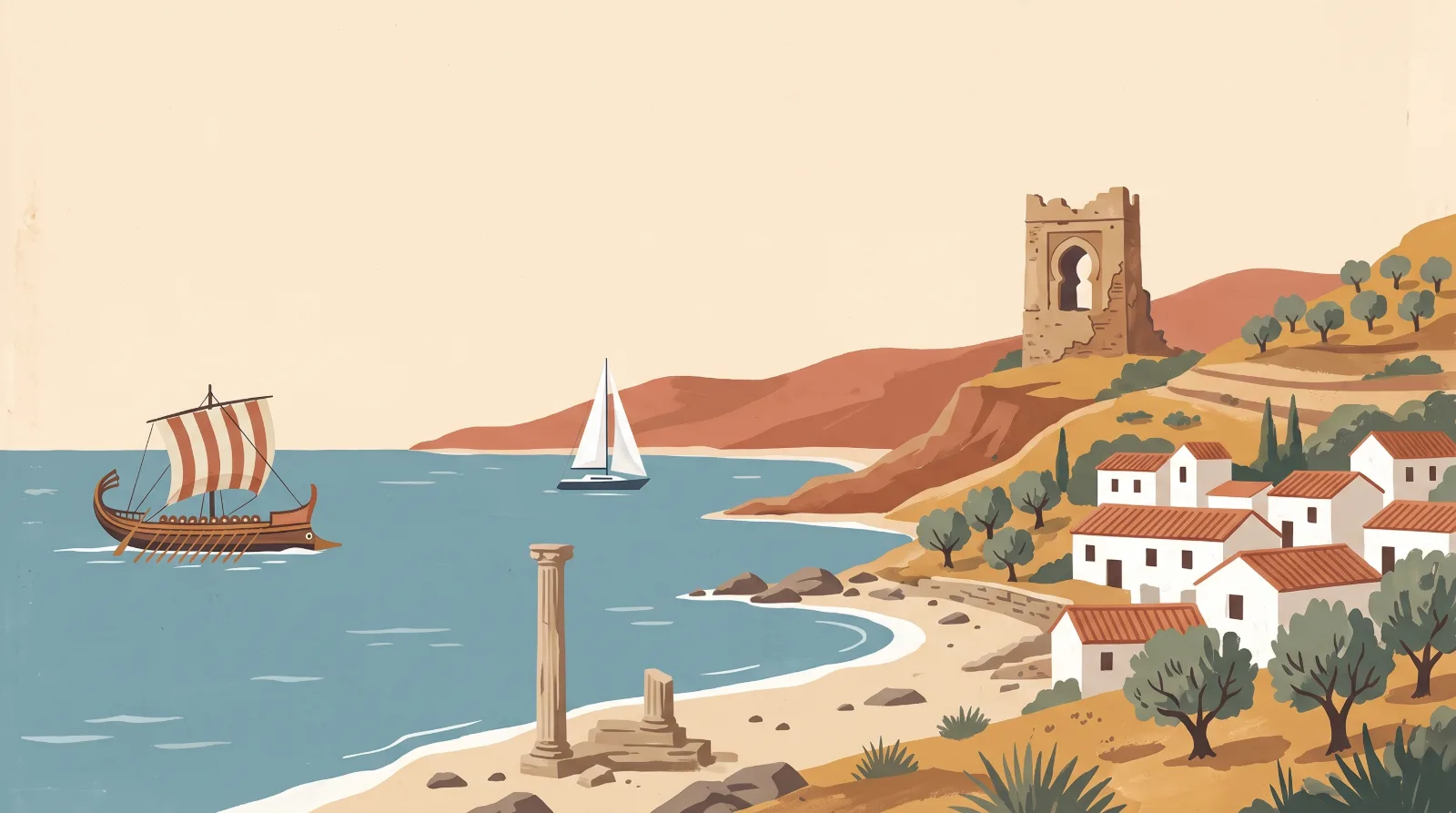
From about the 9th century BC, Phoenician traders founded colonies on the southern coast, among them Gadir (today's Cádiz) and Malaka (Málaga). Their world was one of ports, metals and trade across the Mediterranean. Inland and to the west lay Tartessos, known mainly through Greek writers who mixed history with myth. Historians still debate what it was, and its collapse around the 6th century BC is as much a question as an answer.
Rome and the Visigoths
Rome arrived in 218 BC, during the Second Punic War, and in the time of Augustus created the province of Baetica, with Corduba (Córdoba) as its capital. It is one of the first moments when the south appears as a single administrative region with its own name and its own cities.
After Roman rule weakened, the peninsula changed hands several times. The Visigoths expelled the Vandals in 418, and in the 6th century the Andalusian coast was for a time held by the Byzantines before the Visigoths reclaimed it.
Al-Andalus
In 711, after the battle of Guadalete, an Umayyad army crossed from North Africa. Most historians describe this as a conquest; a small group of authors has argued it was closer to an internal revolution, and the question is not fully closed. What followed is not in doubt. In 756 Abd al-Rahman I founded an independent emirate in Córdoba, and in 912 Abd al-Rahman III proclaimed the Caliphate of Córdoba, which lasted until 1031, when it broke into smaller kingdoms known as taifas.
These centuries left a lasting mark on the region's culture, architecture and language. In 1232 to 1237 Muhammad I founded the Nasrid Kingdom of Granada, the last Muslim state on the peninsula. In the meantime, Christian armies took Córdoba in 1236 and Seville in 1248.
1492 and what came after
In 1492 Granada fell to the Catholic Monarchs, and in the same year, on 3 August, Columbus's first expedition left from Palos de la Frontera in Huelva province. Historians often use 1492 as the symbolic end of the Middle Ages, though they agree it is a convention rather than a clean break.
The decades that followed were hard on the region's Muslim descendants. The War of the Alpujarras, in 1570 to 1572, ended with most Moriscos removed from their lands, and in 1609 they were expelled from Spain. In the later centuries, Andalusia's economic weight shifted: the Casa de Contratación, which controlled trade with the Americas, moved from Seville to Cádiz in 1717. Historians point to a mix of causes for the region's long decline, among them plagues, taxation, poor transport and land ownership, without agreeing on a ranking.
The modern region
The 19th and early 20th centuries brought the Constitution of 1812, drafted in Cádiz, and later the upheavals of the Republic and the Civil War of 1936 to 1939. After Franco's death in 1975, Andalusians voted in a referendum on 28 February 1980 for autonomy by the fast route, and the Statute of Autonomy was approved in 1981.
The coast changes character
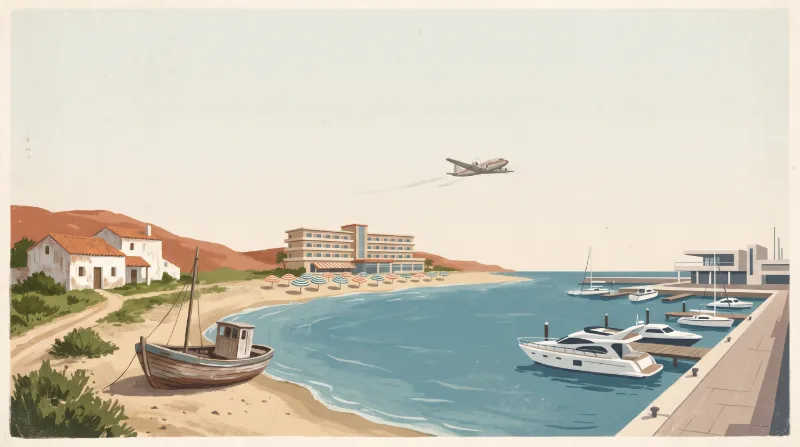
The Costa del Sol as people know it today is a recent chapter. From the 1950s, tourism began to transform this stretch of the coast. In Marbella, the Marbella Club opened in 1954 with its first 20 bedrooms, a dining room and a bar in an old farmhouse that the von Hohenlohe family had bought in 1947 as a retreat among figs and pines; the club's own history credits it with changing the character of the town. Later, José Banús opened Puerto Banús.
In a single lifetime, a coast of fields and small harbours became a place where people from many countries live, work and retire. Spain joined the European Economic Community in 1986, and in the decades since, this stretch of Andalusia has been home to international residents alongside a Spanish culture that remains very much alive.
Why the history matters when you choose a home
For a buyer, history shows up in practical ways. Old town centres, rural land and protected areas each come with their own rules about what can be built and changed, and a plot's history can matter as much as its view. Knowing the story of a place helps you read what you are looking at, and ask your lawyer the right questions before you commit. Our guide to buying property on the Costa del Sol explains the checks in order.
If the history draws you in, here is a selection from our catalogue in Marbella and its surroundings, from resale homes to new developments:
To have a shortlist built around your budget and the way you plan to use a home, tell us what you are looking for, or browse the full collection.
This article is a general introduction to the history of Andalusia, written from published historical sources. Where historians disagree, we say so. Property details and prices are confirmed on request.